Zero Human Exposure.
Maximum Grid Reliability.
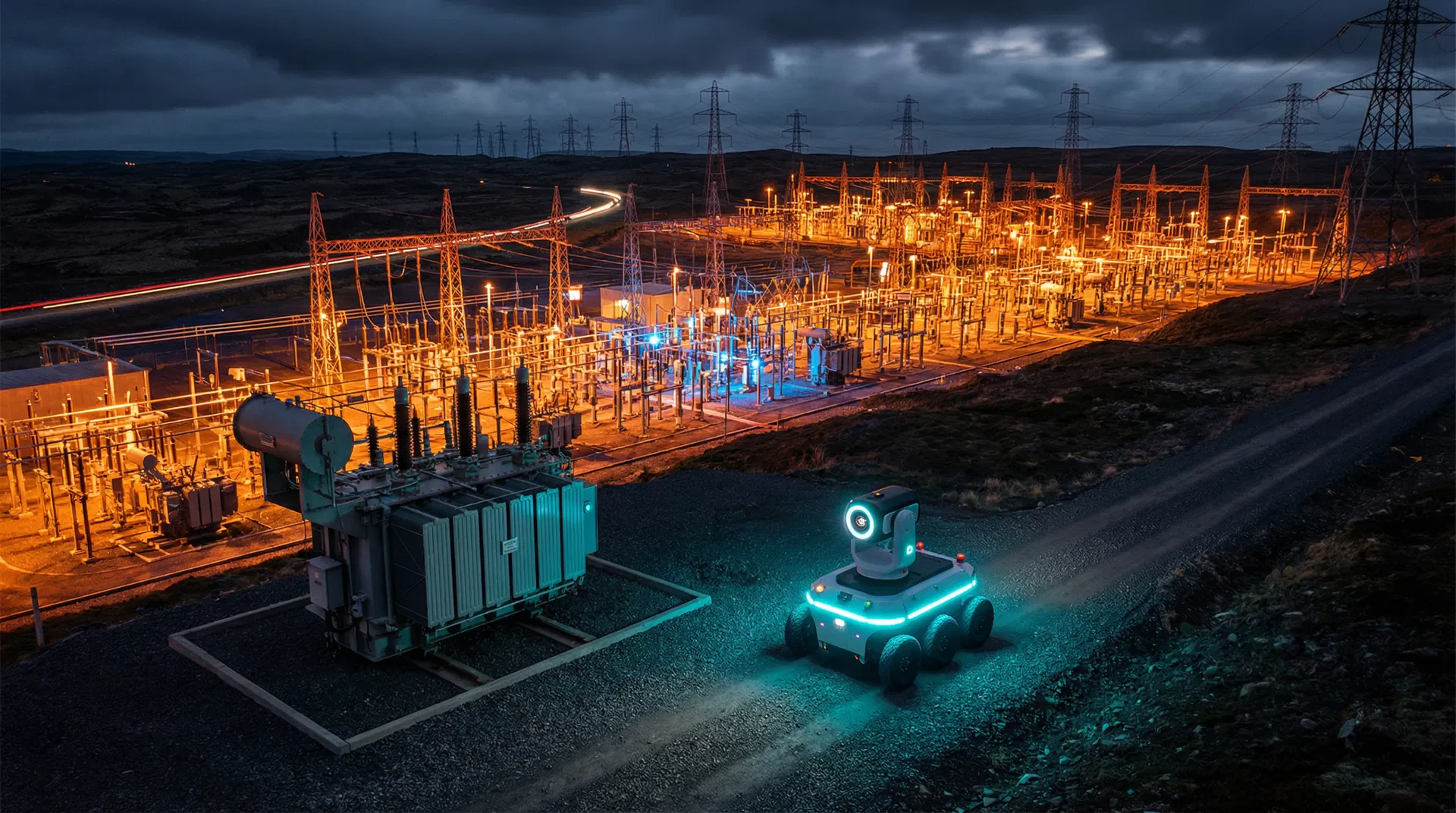
Power grids, transmission lines, and substations are among the most hazardous work environments in the world. Arc flash incidents, SF6 gas exposure, and falls from height at transmission pylons cause serious injuries and fatalities every year. BIT's autonomous systems remove humans from these danger zones entirely — while dramatically increasing inspection frequency, data quality, and operational reliability.
From coordinated three-drone cable maintenance swarms operating on live 400kV transmission lines to wheeled robots that operate main circuit breakers in high-voltage switchgear rooms, BIT delivers autonomous solutions for every critical infrastructure challenge — fully compliant with the EU NIS2 Directive and Critical Entities Resilience Directive.
Full-Spectrum Grid Autonomy
Power Line Cable Maintenance Drones
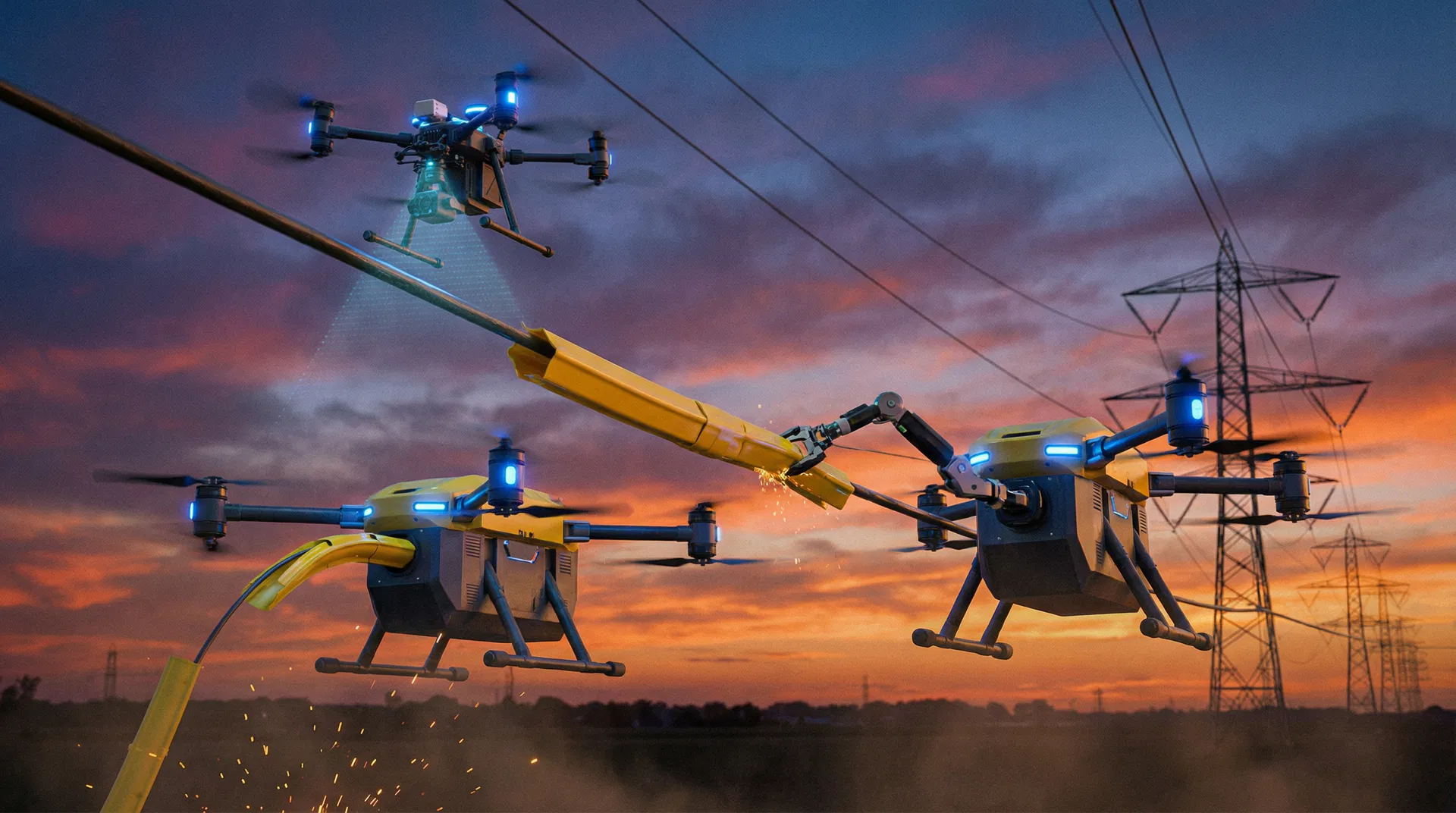
Three-drone swarms perform coordinated aerial cable maintenance on live high-voltage transmission lines — one drone detects faults and guides positioning while two work in tandem to feed and seal protective plastic insulation sleeves around damaged cables, eliminating the need for line de-energisation or human exposure at height.
Substation & Grid Inspection Robots
Autonomous wheeled robots equipped with robotic arms, thermal cameras, and gas sensors conduct continuous inspection of transformer stations, switchgear rooms, and underground cable tunnels — reading meters, detecting SF6 leaks, and identifying thermal anomalies before failures occur.
Hazardous Zone Operations
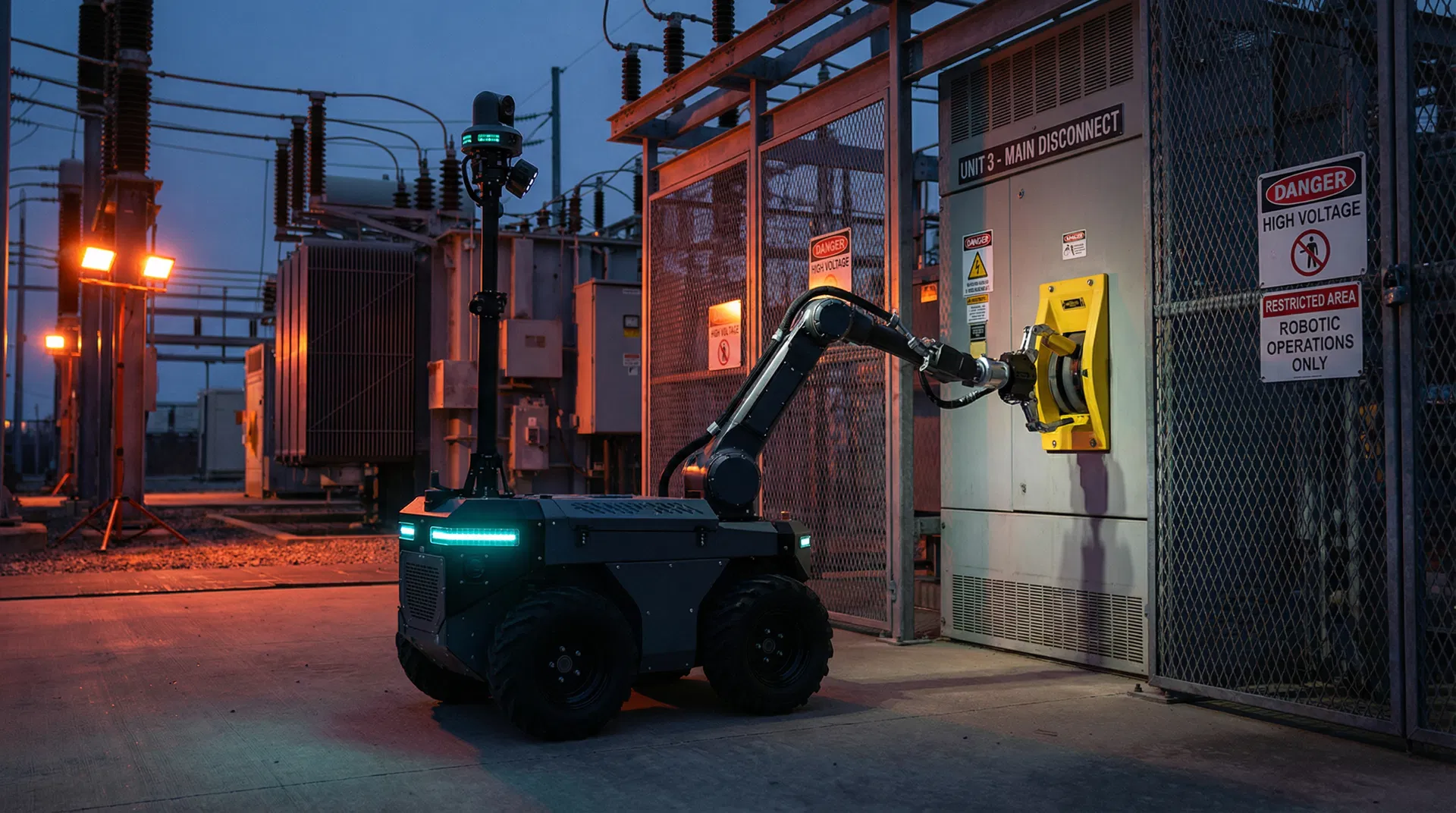
BIT robots operate main circuit breakers, disconnect switches, and isolation equipment in high-voltage environments where human access is prohibited due to arc flash, radiation, or toxic gas risk — executing switching sequences remotely with precision and full audit logging.
Aerial Power Line Inspection
Fixed-wing and multirotor UAVs equipped with LiDAR, thermal imaging, and corona discharge detectors survey hundreds of kilometres of transmission lines per day — identifying conductor damage, vegetation encroachment, insulator degradation, and structural defects at a fraction of helicopter inspection costs.
Underground Cable & Tunnel Inspection
Compact inspection robots navigate underground cable tunnels, conduit networks, and confined utility corridors — monitoring cable joint temperatures, detecting water ingress, and identifying insulation degradation in environments inaccessible to human inspectors.
Grid Intelligence & Predictive Maintenance
BIT's AI platform aggregates sensor data from all deployed robots and drones into a unified grid health dashboard — delivering predictive maintenance alerts, fault probability scores, and automated work order generation to grid operators before outages occur.
Proven in the Field
Aerial Cable Re-Insulation — Three-Drone System
BIT's coordinated three-drone system restores cable insulation on live high-voltage transmission lines without de-energisation. The lead drone performs fault detection and real-time positioning guidance using LiDAR and thermal imaging. Two specialist maintenance drones work in tandem — one feeds the protective plastic cable sleeve onto the conductor while the second seals and compresses it around the cable. The entire operation is executed autonomously, eliminating worker exposure at heights exceeding 100 metres and reducing outage risk to zero.
Autonomous Switchgear Operation & Inspection
BIT's wheeled inspection robots with articulated robotic arms operate circuit breakers, main disconnect switches, and isolation equipment in high-voltage substations — environments where arc flash, SF6 gas, and electromagnetic fields make human presence dangerous. The robot executes pre-programmed switching sequences on command, reads analogue and digital meters, performs thermal scans of transformer bushings and cable joints, and detects SF6 leakage with onboard gas sensors. All operations are logged with timestamped video evidence for regulatory compliance.
Transmission Line Survey & Fault Detection
BIT fixed-wing and multirotor UAVs survey high-voltage transmission corridors at scale — covering hundreds of kilometres per day with thermal imaging, LiDAR, and corona discharge detection. The AI platform automatically classifies detected anomalies by severity, generates geo-referenced fault reports, and integrates findings directly into the grid operator's maintenance management system. Vegetation encroachment, conductor sag, insulator contamination, and structural defects are identified before they cause outages.
One Interface.
Total Grid Visibility.
BIT's Critical Infrastructure Command Platform aggregates real-time data from all deployed drones and ground robots into a single operational dashboard. Grid operators receive live thermal maps, fault alerts, switching logs, and predictive maintenance recommendations — all with full audit trails for regulatory compliance.
- Real-time thermal and visual feeds from all deployed assets
- Automated fault classification and severity scoring
- Remote switching command with full audit logging
- Predictive maintenance alerts and work order generation
- EU NIS2 and CER Directive compliance reporting